Boulderthon 2026 at a glance
- Boulderthon 2026 runs on Sunday 27 September 2026. The marathon and half marathon start together at 7:00 a.m., the Heart to Heart 5K at 7:45 a.m., the 10K at 8:00 a.m. and the Kids Run at 8:15 a.m.
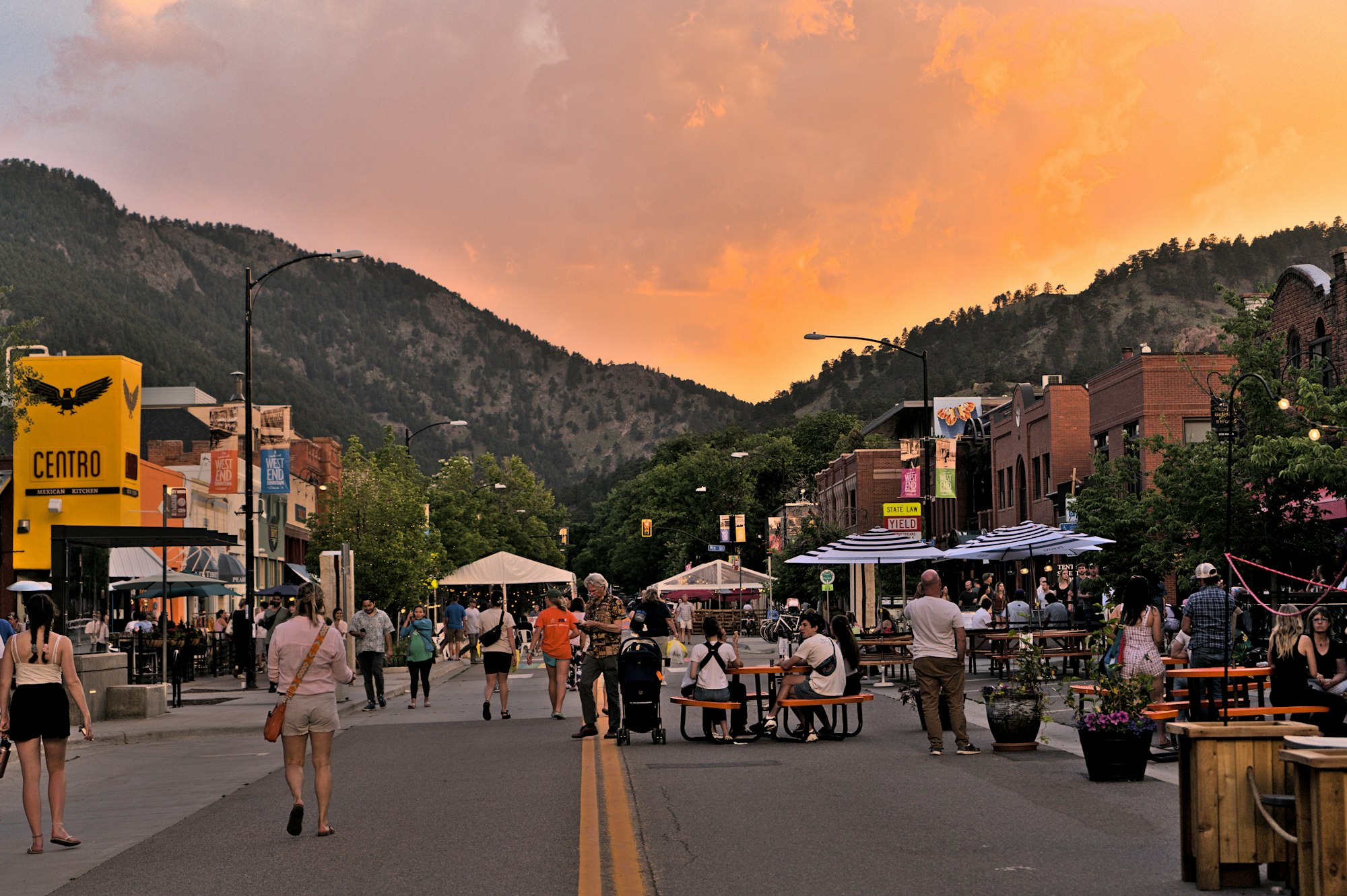
- It is the 6th edition and the course is new. The marathon, half and 10K all start on Pearl Street at 18th and finish on Spruce Street at 15th, a half block off the Pearl Street Mall.
- The marathon climbs 845 feet — a 40-50% reduction on the old course — but saves its high point for mile 23.7. The last five miles are the hard ones.
- Start and finish sit at about 5,335 feet. The course drops to roughly 5,170 feet out east and tops out near 5,396 feet in north Boulder.
- The marathon is a Boston qualifier, USATF-sanctioned and measured by a Level A course measurer. Cutoff is 6 hours; the finish line closes at 2 p.m.
- Race morning is usually cold and dry: across 2015-2025 the mean 7 a.m. temperature on 27 September was 49°F, and 7 of those 11 days recorded no precipitation at all.
Boulderthon 2026 is on Sunday 27 September 2026, and it is a different race from the one people ran in 2025. For its sixth edition Boulderthon redrew every distance: the marathon, half marathon and 10K now start on Pearl Street at 18th, run east out of downtown along Pearl Parkway, and finish on Spruce Street at 15th, a half block from the Pearl Street Mall. The organiser puts the marathon's climbing at 845 feet, a 40-50% cut on the previous course, and expects more than 17,000 runners across the weekend.
This guide is built from the race's own published course files rather than a press release. We decoded the official GPS routes Boulderthon publishes for each distance, checked every mile marker against street data, and sampled the elevation straight off the track — which is how we can tell you the thing the race page does not: the marathon's high point is at mile 23.7, and the run home from Boulder Reservoir climbs roughly 190 feet over the last five miles.
What changed for 2026
Boulderthon calls the 2026 layout “going back to our roots.” In practice three things changed, and all three matter if you have run it before.
The climbing came out. Earlier editions sent runners up toward the foothills. The 2026 marathon instead runs east and north across the Boulder Valley floor, which is why the published gain fell to 845 feet. Our own measurement of the official track agrees on the shape, though a GPS track always reads a little high on ascent — Boulderthon's figure comes from a USATF Level A measurer and is the one to trust.
The Reservoir is the centrepiece. Miles 17 to 20 run the Boulder Reservoir dam road, north and south, with open water on one side and the Front Range filling the windscreen. It is the quietest and the most scenic stretch of the race, and it arrives exactly when a marathon starts to hurt.
The finish moved onto Spruce. Every distance now finishes at 15th and Spruce, one block north of the Pearl Street Mall, feeding straight into the Finish Festival. The Start Village is on the Mall itself between Broadway and 15th; the start line is seven blocks east at 18th and Pearl.
Course lines on this page are decoded from the official route files Boulderthon publishes on its own course-maps page, so they are the organiser's alignment rather than a re-trace. Courses can still change: check boulderthon.org before race week.
The marathon course, mile by mile
Fly the whole 26.2 miles below. Switch the player to first-person to ride the course at ground level, or step through the stops to see each landmark from the air.
Elevation profile
Read that profile as three races. Miles 1-6 are a gift: 5,320 feet at the line down to about 5,172 feet, all of it downhill or flat. Miles 7-20 undulate across the valley floor and around the Reservoir without ever asking a real question. Then miles 21-24 take back everything, topping out at 5,396 feet at mile 23.7.
The practical consequence: a negative-split plan does not work here, and neither does banking time. What works is running the opening six miles 15-20 seconds per mile slower than goal pace, holding through the Reservoir, and having legs left for 26th Street.
The single most useful fact on this page: Boulderthon's marathon high point is at mile 23.7, not at the start. Runners who race the downhill opening arrive at the mile 21 climb with nothing left, and the last five miles cost them far more than the free time the first six gave.
Half marathon, 10K and 5K
| Marathon | Half marathon | 10K | Heart to Heart 5K | |
|---|---|---|---|---|
| Start time | 7:00 a.m. | 7:00 a.m. | 8:00 a.m. | 7:45 a.m. |
| Distance | 26.2 mi | 13.1 mi | 6.2 mi | 3.1 mi |
| Elevation gain (official) | 845 ft | 381 ft | 147 ft | 80 ft |
| Course high point | Mile 23.7 | Mile 10.7 | Mile 6.2 (finish) | Mile 3.1 (finish) |
| Time limit | 6 hours | 6 hours | 2 hours | 2 hours |
| Minimum age | 13 | 9 | No stated minimum | No stated minimum |
| Deferral fee | $90 | $90 | $55 | $30 |
| Boston qualifier | Yes | No | No | No |
The half marathon shares the marathon's first ten miles exactly, then cuts back to town on the Fourmile Canyon Creek path. It has the same trap in a shorter form: its high point is mile 10.7, and the last three miles climb about 200 feet. Pacing groups run 1:30 through 2:40.
The 10K is an out-and-back on Pearl Parkway that turns at roughly mile 3.3 and finishes 138 feet higher than it started. It is not a downhill PR course; the second half is the whole climb.
The Heart to Heart 5K starts on the Pearl Street Mall itself, runs out to Boulder Junction and back, and is the only distance that takes three-wheel jogging strollers — in a separate wave at the back. The Kids Run goes at 8:15 a.m. from 19th and Pearl and finishes on the Mall.
Race-morning weather
Late September in Boulder is the best running weather of the year, and the numbers say so. We pulled the hourly reanalysis temperature for 27 September in Boulder for each of the eleven years from 2015 to 2025 and averaged it by hour.
Three things fall out of that. The gun is the coldest moment of your day — 7 a.m. averaged 49°F across those eleven years, with a coldest year of 44°F. Dress for the ten minutes after the start, not for the wait in the corral, and plan to throw a layer.
It warms about 17°F between the gun and 11 a.m. A four-hour marathoner finishes into an average of 66°F, and in the warmest of those eleven years it was 82°F by then. Sub-3 runners essentially never see that; 5-hour runners always do, and should carry more fluid than the aid stations alone provide.
It is usually dry. Seven of the eleven years recorded no precipitation at all on 27 September, and the eleven-year mean was 0.035 inches. Boulder's late-September rain risk is real but small; the bigger variable is sun at altitude.
Running at 5,335 feet
Boulderthon starts about a thousand feet higher than Denver's reputation suggests people think, and roughly 5,335 feet above sea level. Air at that height holds around 17% less oxygen than at sea level. For a visiting runner that is worth somewhere between two and five percent on marathon pace — several minutes, not seconds — and no amount of fitness argues with it.
The two workable strategies are opposites, and the one that fails is the middle. Either arrive within 24 hours of the gun and race before the altitude response kicks in, or arrive at least a fortnight out and let it finish. Two to five days before is the worst window: long enough to feel every symptom, too short to gain any adaptation.
How to prepare for Boulderthon's altitude as a sea-level runner
Total time: P14D
Supplies: Electrolyte drink mix, SPF 30+ sunscreen, Sunglasses, Handheld or vest flask
- 1. Pick an arrival window
Arrive either within 24 hours of the start, or at least 14 days before it. The 2-5 day window carries the symptoms of altitude without any of the adaptation.
- 2. Start hydrating three days out
Boulder's humidity is low and you lose more water through breathing than you expect. Increase fluid intake by roughly half, and add electrolytes rather than drinking plain water alone.
- 3. Skip alcohol for 48 hours
Alcohol worsens both dehydration and sleep quality at altitude, and poor sleep is the main reason visiting runners feel flat on race morning.
- 4. Adjust your goal pace before the gun, not at mile 18
Add 15-30 seconds per mile to sea-level marathon pace and hold it from the first mile. The downhill opening six miles make this feel wrong, which is exactly why it works.
- 5. Cover up for the sun
UV intensity rises roughly 4% per thousand feet. Sunscreen and sunglasses matter more here than the temperature does.
- 6. Save something for mile 21
The course's climbing is all in the last five miles. Run the first half so that you can still run 26th Street at mile 23.7.
| Sea-level marathon time | Realistic Boulder equivalent | Added per mile |
|---|---|---|
| 3:00 | 3:04 - 3:09 | 10-20 sec |
| 3:30 | 3:35 - 3:41 | 12-25 sec |
| 4:00 | 4:05 - 4:12 | 12-28 sec |
| 4:30 | 4:36 - 4:44 | 14-32 sec |
| 5:00 | 5:07 - 5:16 | 16-36 sec |
Those are planning figures, not a formula — individual altitude response varies more than any table can capture, and an acclimatised Front Range local pays almost nothing. Treat the low end as the best case if you arrive fit and early, and the high end as what happens if you fly in on Friday.
Race-day logistics
Race-week checklist
- Pick up your bib Friday or Saturday — there is no race-morning packet pickup
- Bring photo ID and the QR code from your confirmation email
- Plan a throwaway layer for a 44-57°F start
- Sunscreen on before you leave, not in the corral
- Leave the dog at home — pets are barred from the course and the Mall
- Only three-wheel jogging strollers, 5K only, back of the field
- Headphones are allowed but discouraged; keep the volume low
- Uber drop-off is 1515 Walnut Street, at the Start Village
Where to watch
Because the marathon runs out and back through the same eastern corridor, one well-chosen corner gets you two sightings. These five spots are on the official course track, with coordinates you can drop straight into a maps app.
Live tracking goes up on boulderthon.org on race morning — search a runner by name or bib. If you are spectating at the Reservoir, expect patchy mobile signal and agree a plan beforehand.
Getting there from Denver
Boulder is about 30 miles northwest of Denver, and on a Sunday morning the drive up US-36 takes 35-45 minutes. For a 7:00 a.m. gun that means leaving Denver by 5:30 a.m. — downtown closures start early and the garages nearest the start fill first.
RTD's Flatiron Flyer runs Denver Union Station to the Boulder Transit Center at 14th and Walnut, which is two blocks from the finish line, though the early-Sunday timetable is thin enough that most Denver runners drive or carpool. Denver International Airport is roughly 45 minutes away and has a direct bus. Uber and Lyft drop at 1515 Walnut Street, beside the Start Village.
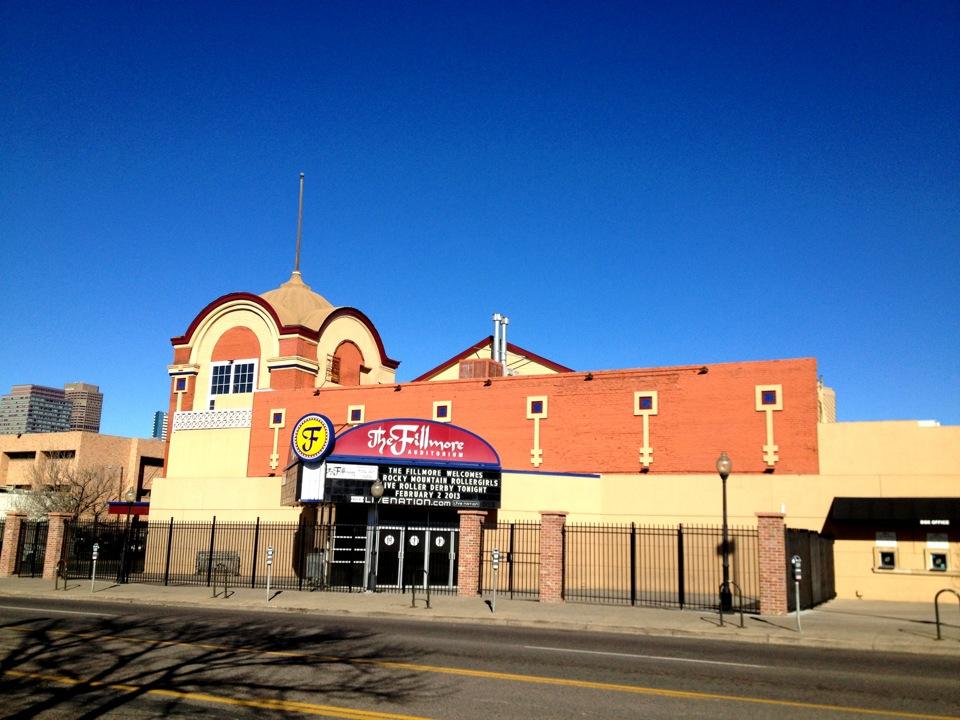
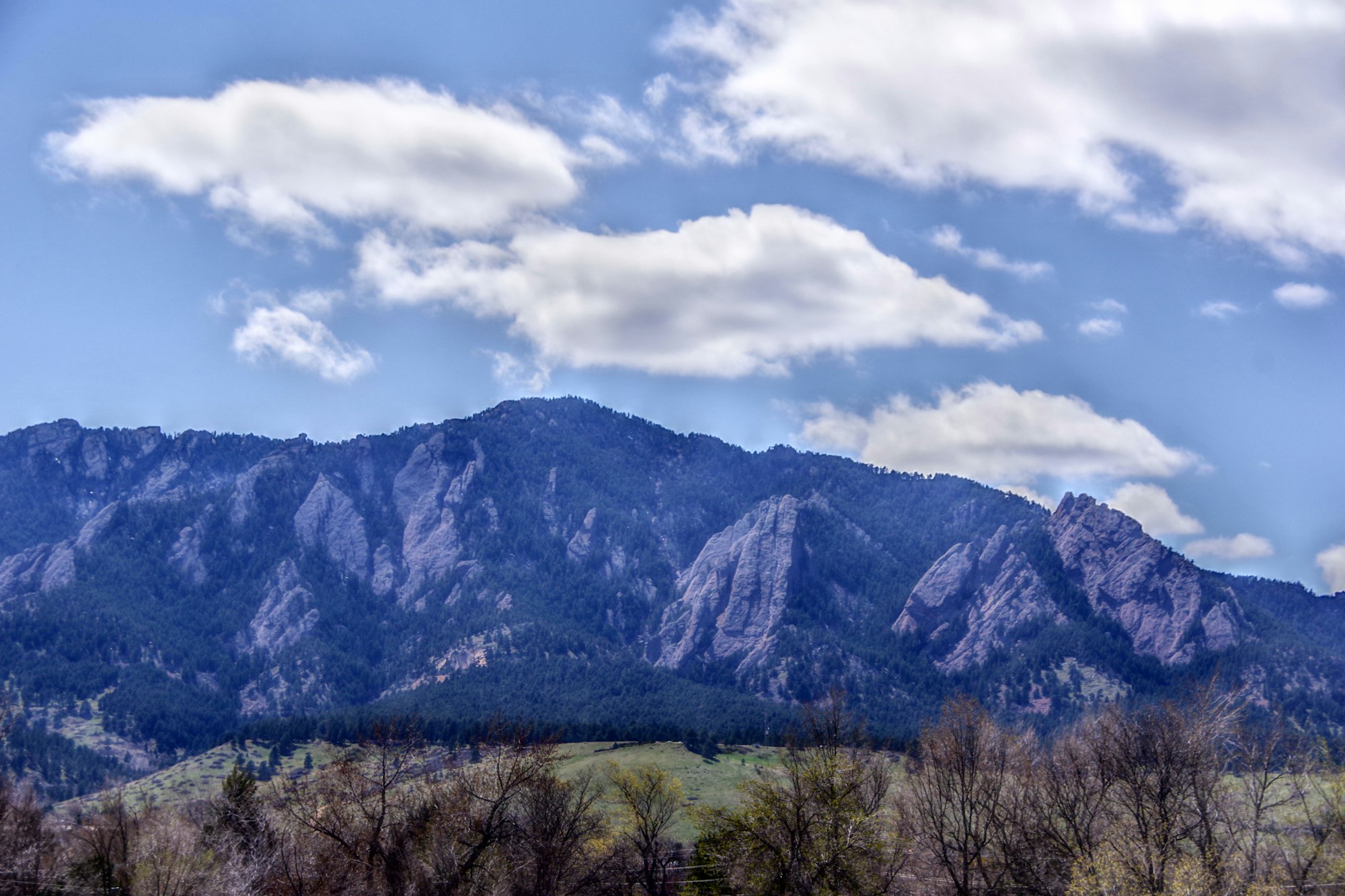
If you are making a weekend of it, Boulder's music rooms are within a few blocks of the finish: the Boulder Theater and the Fox Theatre both sit near the course, and Chautauqua Auditorium is a ten-minute drive west under the Flatirons. Check what else is on that weekend before you book.
Boulderthon vs the Colfax Marathon
Colorado's two big road marathons sit at opposite ends of the calendar and are genuinely different races. If you are choosing one, this is the comparison that matters.
| Boulderthon 2026 Register | Colfax Marathon 2027 Course guide | |
|---|---|---|
| Date | Sunday 27 September 2026 | Sunday 16 May 2027 |
| City | Boulder | Denver |
| Marathon start | 7:00 a.m., Pearl St at 18th | 6:00 a.m., City Park |
| Start elevation | ~5,335 ft | ~5,280 ft |
| Marathon climbing | 845 ft (published) | Not published; ~570 ft sampled |
| Shape of the day | Descend out, climb home — high point at mile 23.7 | Descend, climb to mile 15.5, then descend home |
| Scenery | Boulder Reservoir, farmland, Flatirons | Colfax Ave, Empower Field, Sloan's Lake, Denver Zoo |
| Signature moment | Crossing the Reservoir dam at mile 18 | Running through Empower Field at Mile High |
| Mean gun-time temp (11-yr) | 49°F at 7 a.m. | 46°F at 6 a.m. |
| Marathon cutoff | 6 hours | 6 hours |
| Boston qualifier | Yes | Yes |
Short version: Boulderthon is the prettier and quieter race and rewards a runner who paces the first half honestly. Colfax is the louder, more urban one — a stadium run-through, a zoo mile and a fire station full of firefighters handing out high-fives. Our full Denver Colfax Marathon 2027 course guide covers that weekend in the same detail, and the Colfax guide hub has every distance.
Boulderthon 2026 FAQ
- BQ
- Boston Qualifier. A race whose course is certified and sanctioned such that a finishing time can be submitted for Boston Marathon entry. Boulderthon's marathon qualifies.
- USATF Level A measurement
- The highest grade of course certification in US road racing, requiring a calibrated-bicycle measurement by an accredited measurer. It is what makes a distance and its elevation figures trustworthy.
- Negative split
- Running the second half of a race faster than the first. On the 2026 Boulderthon marathon course an even effort produces a slower second half by design, because the climbing is at the end.
- Acclimatisation
- The physiological adjustment to lower oxygen availability at altitude. Meaningful adaptation takes about two weeks; the first few days at altitude are usually worse than the first few hours.
Running Boulderthon 2026?
Registration for all four distances is open at boulderthon.org, with early-bird pricing before it tiers up.
Register at boulderthon.orgGet Colorado race updates
Course changes, race-week weather and the best spectator corners for every big Front Range race, from 303Happenings.
Last verified September 2026 by the 303Happenings desk. Hours, prices, and access change — confirm current details with the venue.