Last call comes at 2 a.m. at Charlie's Denver , and the doors open at 11 a.m., so the bar covers the whole day and well past the end of any class. It serves beer, wine and cocktails, and it has outdoor seating and live music. The entrance is wheelchair accessible, and the price range is moderate. Free street parking is available, which spares a first-timer the hunt for a garage.
Line dancing needs no partner, and in Denver the place to try it is Charlie's Denver, a country-western saloon and Top-40 dance club at 900 E Colfax Ave that is open daily from 11 a.m. to 2 a.m. It offers free lessons, so the first decision is simply which evening to walk in. Below: how the dances work, what to put on your feet, and what the bar itself offers, with last call placed where it belongs, ahead of the fanfare.
What line dancing and country dancing are
A line dance is a choreographed dance in which a group follows a repeating sequence of steps while arranged in one or more lines or rows, as Wikipedia describes it. Unlike circle dancing, the dancers are not in physical contact with each other, so nobody needs a partner. Each dance is usually tied to a specific song, which is why the dances tend to be called by the song's name.
The Dance Facts calls it a group dance in which everyone performs the same sequence of steps in lines or rows. It adds that line dances are performed to country, pop, disco, R&B, soul, Latin, hip-hop, rock and other styles. A night billed as country dancing can therefore include songs well outside country, which is the one dry surprise in the whole genre.
Wikipedia says line dancing is practiced and learned in country-western dance bars, social clubs, dance clubs and ballrooms. In Denver, the country-western bar is the setting.
Many dances change direction between repetitions, which produces one-wall, two-wall or four-wall patterns. A routine is organized around a fixed number of musical counts, such as 16, 32, 48 or 64, The Dance Facts explains. For a beginner, that means the dance repeats, and each repeat is a chance to catch up. A dance built on 16 counts comes around again quickly, and one built on 64 simply gives the floor a longer lap before the start. A wall pattern works the same way: when the group turns to face a new direction, the person who was at the back of the room is suddenly at the front, so nobody holds a permanent spot.
A short history of line dancing
The precise origins of line dancing are not entirely clear, Wikipedia says. Fuego Dance notes that line dancing originated in country and western culture but has expanded far beyond it. That fits what a Denver dance floor looks like now: a country-western bar where the playlist is not limited to country, and where the dances belong to anyone who learns the steps.
What to expect at a class
Beginner line dances lean on a short list of moves. Fuego Dance says most beginner line dances use six to eight foundational steps repeated in sequence: the grapevine, shuffle, step-touch, kick-ball-change, heel dig and pivot turn. Almost all line dances are built on 8-count phrases, so once the counting clicks, the structure of a new dance becomes easier to see. The Electric Slide, Cupid Shuffle and Cha Cha Slide are named there as the three easiest to learn first.
Class structure varies by teacher. At LineDance4You, a class teaches several dances through the night, starting with easier ones and building from there. The instructor breaks each dance down step by step, practices the steps before adding the music, and calls out the steps while the class dances. Each dance is done twice: first with the instructor calling, then without. LineDance4You also says its DJs play dances learned in previous weeks between lessons and throughout the night. That is one studio's format, not a description of every class, so a first visit to any room is also a first look at how that teacher runs things.
The steps named above are small ones. A grapevine is a sideways walk, a step-touch is exactly what it sounds like, and a pivot turn is the move that explains the advice about shoes in the next section. Nothing on the list asks for a partner.
What to wear and bring
Two Left Boots puts comfort and mobility first. Cowboy boots offer ankle support, stability and a Western flair, and leather soles allow smooth gliding and turning. Dance sneakers provide support and cushioning and often have suede soles that give traction. Leggings or yoga pants are ideal for line dancing or country swing. The same source advises breaking in new shoes before hitting the dance floor, to minimize blisters and discomfort.
Fuego Dance points to lightweight, non-marking dance sneakers with pivot support as a significant difference for footwear. Wikipedia notes that in modern line dance clubs, participants dress in casual clothing and often wear dance trainers rather than Western-style clothing or boots. So boots are optional. Shoes that pivot and are already worn in are not.
Charlie's Denver: drinks, hours and access

Anyone planning a late night on Colfax should line up transit or a rideshare before the second round, not after it. Hours and class schedules change, so the bar's site carries current details.
Lessons and what they cost

Charlie's Denver offers free nightly lessons in a fun, inclusive LGBTQ+ friendly environment, according to 303Happenings . Pair that with the free street parking, and the spending left is whatever gets ordered at the bar, where the price range is moderate. That makes the first night an easy decision, and a second round is a choice rather than a requirement.
Where to go around Denver
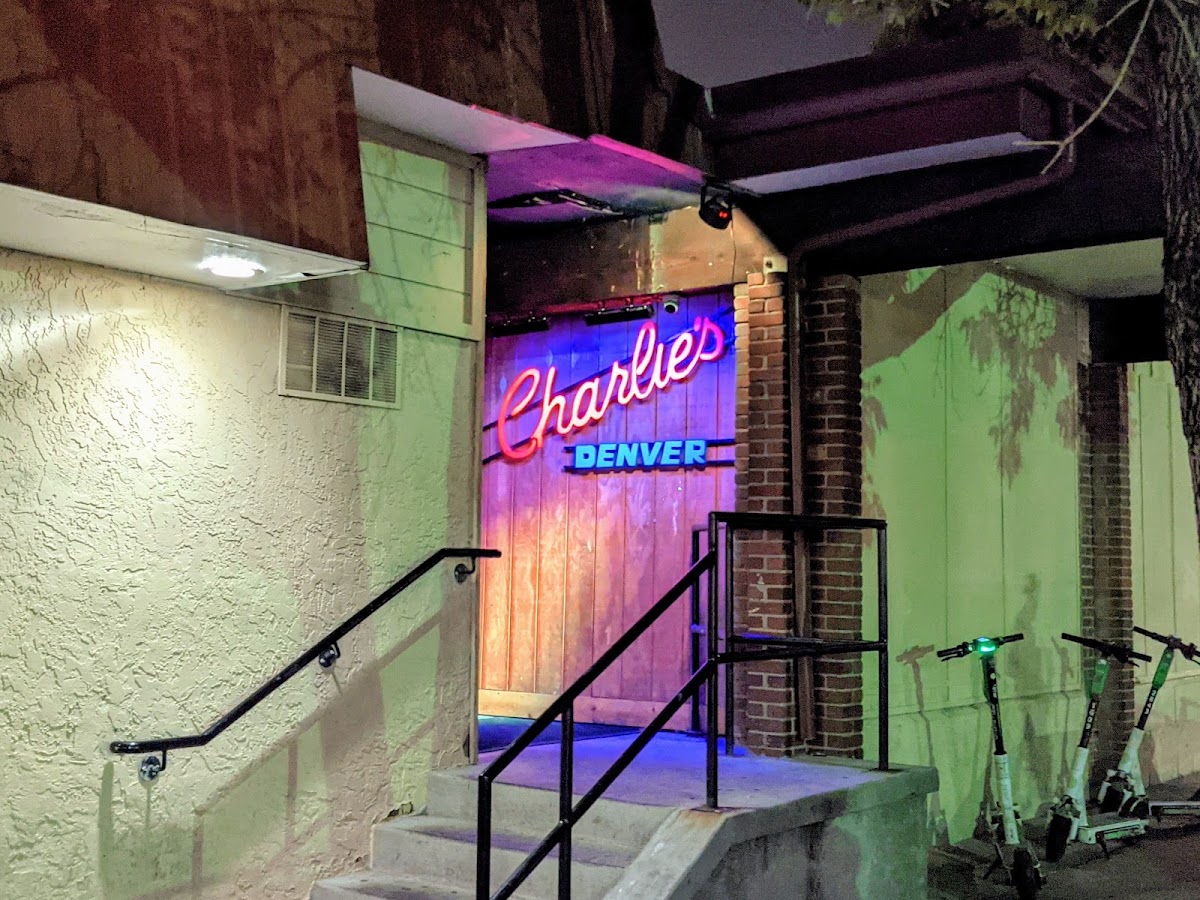
Charlie's Denver is a gay bar that is part country-western saloon, part Top-40 dance club, and it draws a mixed crowd, as Google describes it. Wikipedia records that it was established in 1981 and has operated for more than 40 years. The mix of regular bar and lesson floor suits a first-timer who wants to learn the steps in a room where nobody is expected to know them already.
The bar sits at 900 E Colfax Ave, with free street parking nearby and a wheelchair accessible entrance. Live music and outdoor seating mean the evening does not have to be all dancing. For other nights out in the same spirit, Bar Trivia Denver covers a different kind of bar night, and Live Music in Denver covers the shows.
Kinds of classes and nights
There are two kinds of nights to look for: lesson nights and social dance nights. Lesson nights are for learning. LineDance4You describes a format of several dances through the evening, easier ones first, with each step practiced before the music goes on. Social dance nights are for dancing what you already know. The LineDance4You format blends the two, with DJs playing dances from earlier weeks between lessons. Start with a lesson, then come back for the dancing with the routines already in your feet.
Because Charlie's Denver is also a regular bar that is open from 11 a.m., the lesson and the ordinary night out share a room. That is a different feel from a studio, where the class is the whole point and the floor empties afterward.
Groups and going without a partner
A group can arrive together and dance as one. The Dance Facts adds that most routines do not require partners, so people can join individually while still participating as part of a group. Routines repeat fixed counts such as 16 or 32, which keeps a mixed-skill group moving through the same pattern. A friend who has never danced and a friend who has can stand in the same row and finish the same song.
Nobody has to ask anyone to dance, and nobody is left standing at the edge waiting to be asked. Going alone is as workable as going with six friends.
Beginner advice for a first line dancing class
No dance experience is needed, LineDance4You says. Because the steps repeat in sequence, there is a second chance on every pass. If you get lost, keep moving, watch the people around you, or step off the floor and jump back in. Start with the easiest dances Fuego Dance names, covered above, and leave the longer routines for later. Break in the shoes beforehand and wear something you can move in. Then take the 2 a.m. close as a ceiling, not a target, and leave when the legs say so. Charlie's Denver has outdoor seating for a breather between dances.