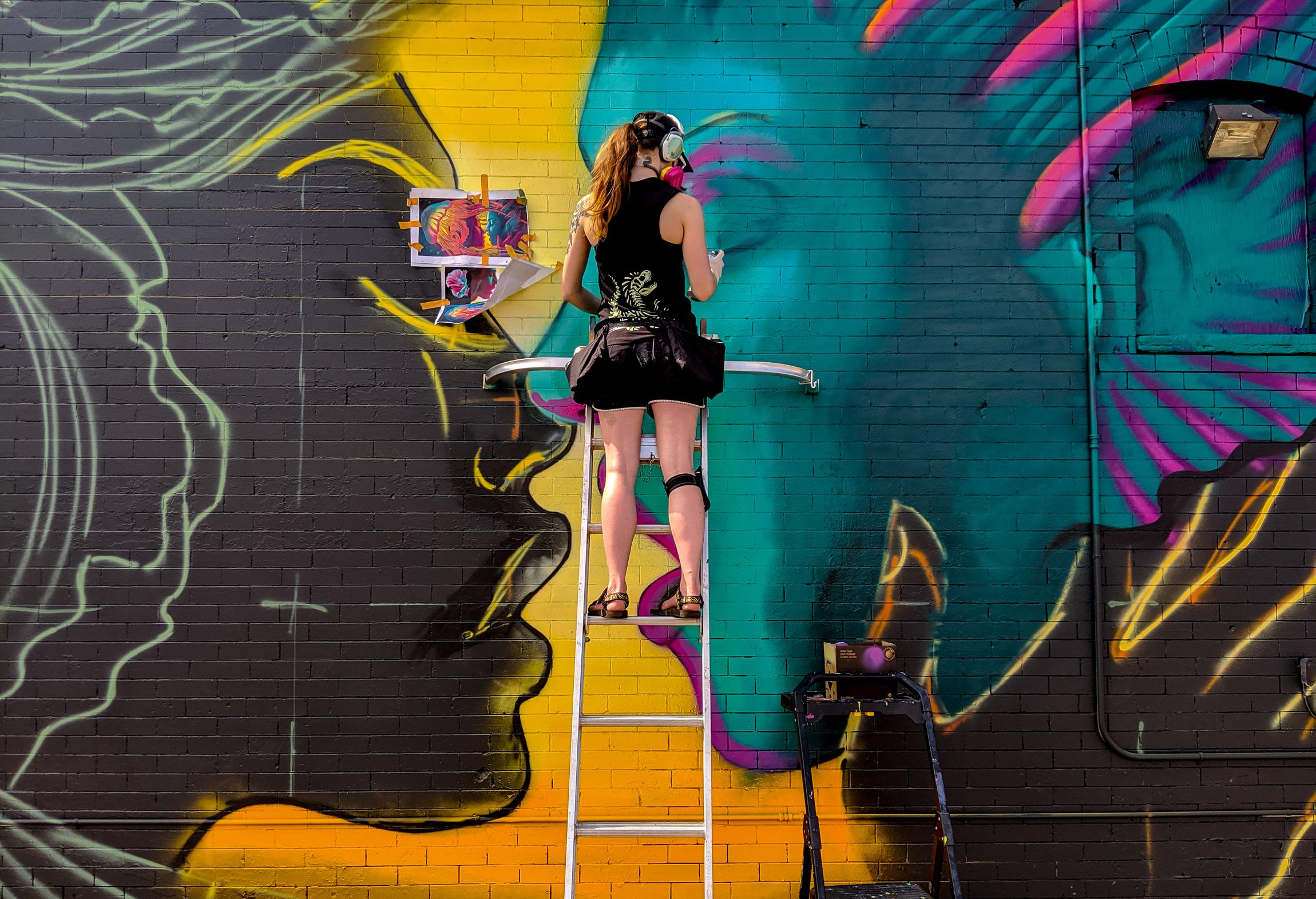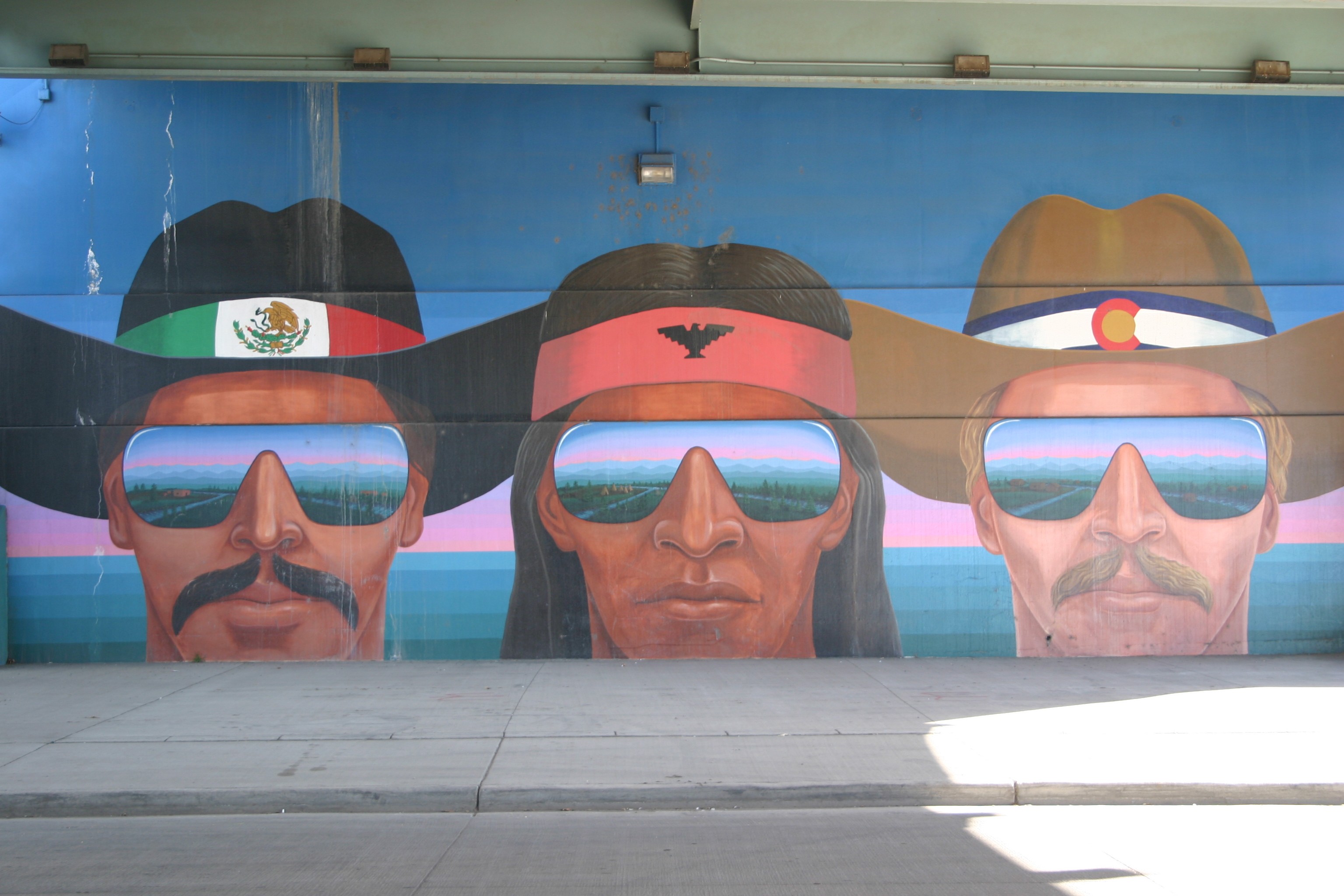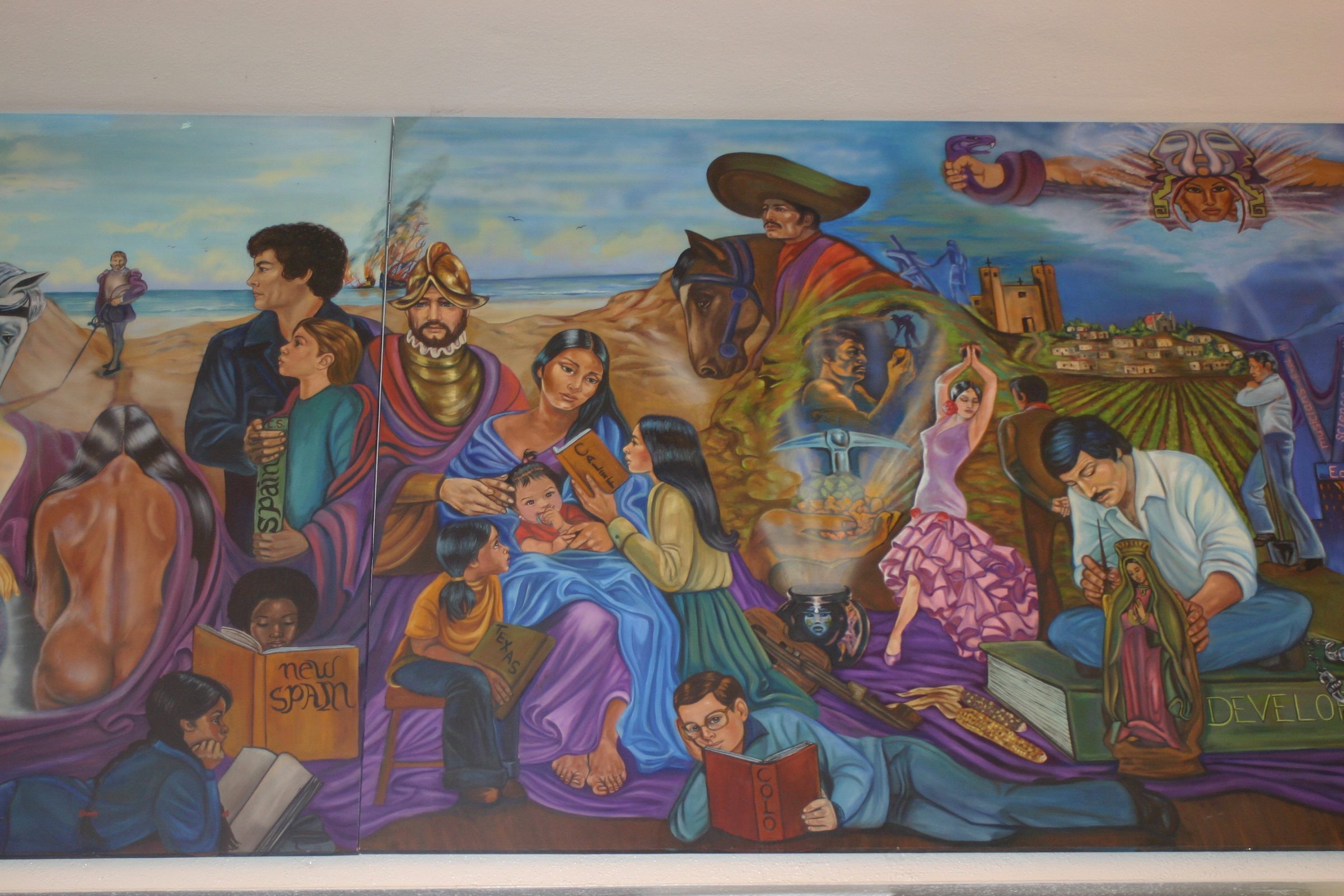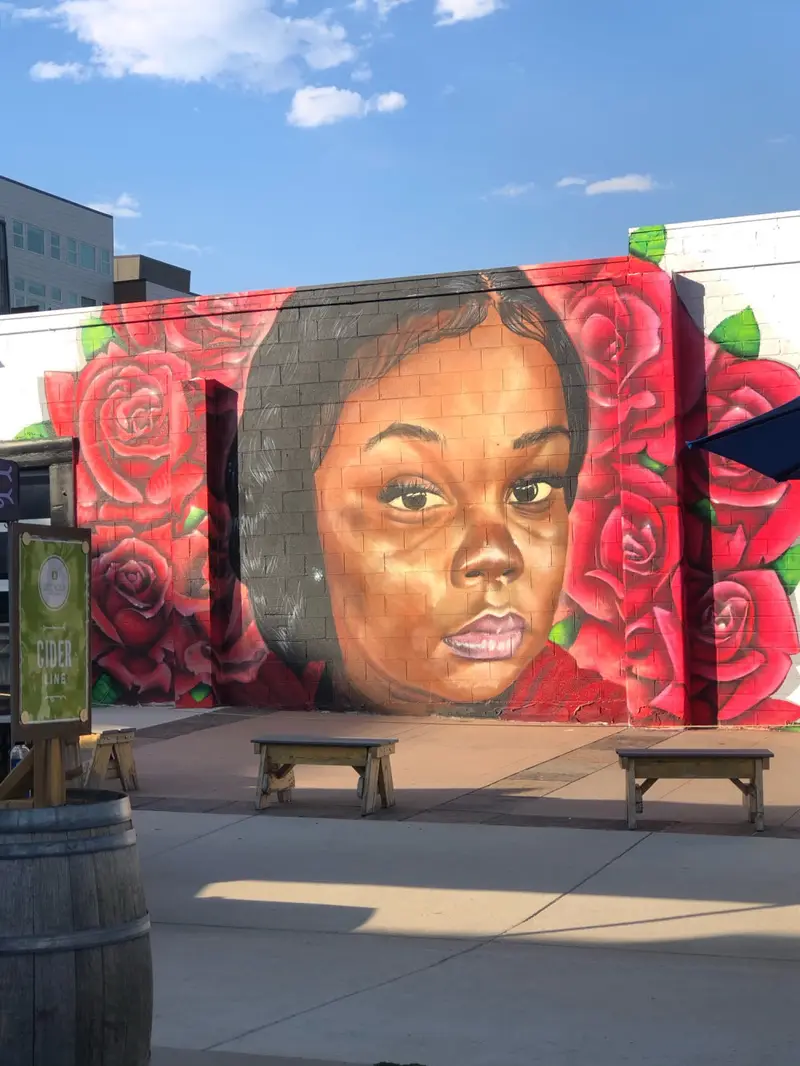
Five Points street art puts jazz-era heritage murals and newer commissions on one walkable stretch of Welton Street, and redevelopment shapes both. Every wall is on the street and can be viewed from the sidewalk. The walk runs northeast along a single street, with older figurative paintings first and cleaner, more graphic walls on new construction after. Read in that order, the route shows a neighborhood remembering its music while the blocks around the paintings are rebuilt.
The Welton Street Corridor
Welton Street is the spine of the Five Points mural walk. It is one street, end to end, so there are no turns to plan and no loop to memorize. The walk takes its rhythm from the cross streets. Each one is a short pause: stop at the corner, look back along the wall just passed, then look ahead to the next.
A mural project for the corridor, described by Denverite, set out to bring color and light to the Welton Street corridor. That makes painting part of how the blocks are being refreshed, so the walls here belong to the street's present as well as its past.
That rhythm suits the way the murals are painted. Many sit on the side walls of low buildings and face the sidewalk, and some wrap around a corner and continue onto the side street. A mural that turns a corner is only half seen from the front, so follow it around before moving on. Tall walls need distance. Step to the opposite curb, and cross at the corners rather than mid-block, so the view is never taken from the middle of the roadway.
Two kinds of painting share the line. Older figurative work, with portraits, instruments and scenes, comes first. Newer pieces on freshly built walls come after. Seen in walking order, the contrast is plain: hand-painted warmth first, then precise color and pattern. Neither reads well at speed, and a pause at each cross street gives both a fair look.
For route planning, the Denver Mural Map supports the Five Points corridor and notes that walls change, and the Denver Murals Guide lays out street art walks by neighborhood. Check the map before leaving to see which walls to expect, then use the guide to place Five Points among the city's other mural routes. The map is a plan for the walk, not a promise about any one wall.
Because the walk follows one street, it also reads as a timeline. Each block sits a short step from the next, so the change from older to newer work happens in view rather than across town. A walker who keeps the pace slow can compare how the painted surfaces, the lettering, the framing and the buildings themselves change from one cross street to the next.
Begin with the plainest question on each block: what is the wall made of, and who is it facing? A mural on a brick side wall sits close to the sidewalk and is read in pieces as you pass. A mural on a smooth new facade is read whole, from across the street. Asking that question at every cross street turns a stroll into a comparison, and the comparison is the point of walking this corridor in order.
Jazz-Era Heritage Murals
The heritage murals keep the neighborhood's jazz history visible on the street. Look first for portraits, instruments and scenes of musicians, painted at close range on low buildings so that a viewer stands near enough to see the brushwork. Then ask what the paint is standing in for: a mural can mark the kind of place where music was played, even where the room itself is gone. For the jazz context of the neighborhood itself, Arts & Venues Denver keeps its Five Points Jazz Grantees page.
Five Points live music and murals: 5 places to go covers stages and walls together, a natural follow-up to a daytime walk, when the paintings are the main event and the music is a plan for later. The walls give the history in daylight, and the stages give the sound after dark.
Walk the length of each wall before judging it. Detail sits at the edges, in hand-lettered text, borders, and slivers of instruments at the corners. A portrait on a side wall reads differently from a scene facing the sidewalk, so notice where the painting sits as well as what it shows. A face placed above a doorway looks down on the street. A scene at eye level draws the viewer into the middle of it.
Figurative work guides the eye in a pattern. It moves from a face to a hand, from the hand to an instrument, and out to any lettering that frames the scene. Standing close shows how the paint was applied. Standing across the street shows how the painting answers the building around it, and whether the wall was chosen for its size, its light or its place on the block.
The warm tones and the scale of these walls match the low buildings they cover. They look like the neighborhood they describe: made by hand, worn in places and still legible. A portrait of a musician on a wall that has taken years of weather asks for a slower look than a new wall does.
For heritage murals elsewhere in the city, Denver iconic murals by neighborhood and street gives the citywide context. This page stays on Welton Street and follows the order of the walk, with each wall read against the one before it.
New Commissions on New Walls
Past the heritage stretch, new construction along the corridor means new surfaces for commissioned murals, on buildings that did not exist when the older paintings went up. The Denverite report on the Welton Street mural project is the place to start for the commissioned work. The newer pieces lean toward pattern and color. Set against the figurative heritage work, they shift the reading from story to surface, from who is shown to how the wall is composed.
A new wall changes the viewing conditions. The surface is smooth and the building is often taller, so the painting is meant to be read from farther away. Step to the far curb to take in a whole wall before moving on. A commissioned wall often meets a storefront or an entrance at the sidewalk, so the painting and the street life share one frontage, and the mural becomes part of how a building greets the sidewalk.
The best way to see the change is by comparison. Stand in front of a heritage wall, note the distance at which it reads best, then stand the same distance from a new wall and ask what is gained and what is lost. On Welton the two kinds sit within one walk, so the comparison costs little time. The change reads as a next chapter rather than a break, and both approaches stay on the same street.
How Denver Became a Street Art Capital gives the background on how commissioned work became part of the city's streetscape. It explains why a new building's blank wall now so often becomes a painting, which is what the northern half of this walk shows.
A heritage mural names a person or a scene. A color-field wall asks the viewer to react to scale and palette. That is a difference of purpose rather than quality. Both belong on this walk, and each makes the other easier to see. After a few blocks the eye starts to sort walls on its own: this one tells a story, that one sets a mood, and the building beneath each one explains why.
Indoor Art and Museum Context
The street art has an indoor counterpart in the neighborhood's museum and gallery spaces, where the history told on the walls outside can be told again with objects and photographs in a quiet room. A short detour off Welton adds context for the paintings already seen and gives shelter from weather or construction dust.
Treat the mural walk as the fixed part of the day and any indoor stop as the flexible part. If the indoor stop is closed, the street walk stands on its own. The order can also be reversed: some walkers prefer to see the objects first and then find the same stories painted at building scale. Either way, the indoor visit and the outdoor walk explain each other, since one preserves objects and the other preserves an image on a wall.
Hours can change, so confirm hours and admission with any venue before planning around it. Nothing on this walk depends on a single opening time.
For a break between stops, Coffee shops in Five Points: 3 places, hours, parking lists neighborhood options. A pause at the midpoint helps the walk: the second half of the corridor is easier to read after a rest and a few minutes without looking at walls.
Redevelopment and Mural Preservation
The development that opens new walls for murals can also take old ones. Walls change as buildings come down and go up, and the walk records a neighborhood in motion, with older pieces holding their ground and newer ones claiming fresh territory.
The tension shows on the walls themselves. The heritage work carries the history of the neighborhood's jazz life. The newer work is built on pattern and color. A walker moving northeast sees one give way to the other, block by block, without needing a label to explain it. The street art in Five Points is more than decoration: it is a record of what the neighborhood chose to remember and what it is building next, set down at building scale.
That has a practical side for anyone planning a visit. A wall that stands today may be a construction site next year, and a bare wall may carry a new painting. Treat any mural you want to see as one that could change, and look first at the walls that are there rather than the ones in an old photograph. The Denver Mural Map notes that walls change, so check it before setting out.
Preservation is also a question of attention. A mural that people stop to look at, photograph and talk about is harder to overlook when a building changes hands. Walking the corridor slowly and naming what is on each wall is a small way of keeping the record.
Santa Fe Murals Denver: Chicano Art Heritage on the Original Arts Corridor shows how another arts corridor carries its heritage in paint. It makes a useful comparison with Welton Street, where the questions of memory and change play out on different walls. Reading the two corridors side by side shows that a street of murals is always a street in the middle of change.
Walking Route and Questions
Start at the southern end of Welton Street and walk northeast, looking for heritage murals first and newer commissions after. This is a street walk, so the art sits in the same weather, traffic and construction as everything else on the corridor. Dress for the day and expect some walls to be partly hidden by scaffolding or fencing.
Take the walk in three passes. On the first, stay on the sidewalk side and read each wall close up, where brushwork, lettering and borders show. On the second, cross at the corner and read the same wall from the far curb, where the whole composition comes into view. On the third, look at what surrounds the wall: the doorway beneath it, the building next door, the lot beyond. That last look is where redevelopment shows.
Where are the Five Points murals?
They are on public-facing exterior walls along Welton Street, so they can be seen from the sidewalk without a ticket. Start at the southern end and head northeast, one cross street at a time. Museum or gallery entry is separate, so confirm admission with the venue.
Where is the best street art in Five Points?
Along Welton Street, where heritage murals come first and newer commissions appear as you head northeast. Walk the corridor in that order and compare each new wall with the older one before it.
What happens if a mural is gone?
Walls change as buildings come down and new ones go up. A gap on the block may be a wall that was lost, and a fresh facade may be waiting for a painting. Check the Denver Mural Map before you go.
Which routes follow Five Points?
The Denver Murals Guide covers routes in other neighborhoods. For more of Five Points beyond its walls, see Hidden Gems in Five Points: 6 Places Worth the Trip.
Updated 2026-10-15: restored the full walking-order sections, cited the Denverite and Arts & Venues Denver sources inline, and kept the focus on Welton Street.
Keep reading
ArtSanta Fe Murals Denver: Chicano Art Heritage on the Original Arts Corridor
Santa Fe Drive's murals predate Denver's street art boom by decades. Walk the original arts corridor.
6 min de lecturaArts & CultureRainy Day Boos: A Wednesday Paint and Sip Night in Lone Tree
Three facts from the listing make the case. The class is guided, so Brittlyn walks the room through the painting rather than leaving you with a blank
13 de octubre de 2026 · 3 min de lecturaSeasonal & HolidaysJack-o'-Lantern Moon: A Two-Hour Paint and Sip in Lone Tree
The class runs two hours, which fits inside a Saturday afternoon without taking the whole day.
13 de octubre de 2026 · 3 min de lectura