Long before RiNo’s warehouse walls attracted international aerosol artists, Santa Fe Drive was already painted. The corridor between 6th Avenue and Alameda has carried Chicano murals since the 1970s — large-scale walls commissioned by families, cultural organizations, and the artists themselves. These are not decoration. They are public records of a neighborhood’s identity, painted in latex and aerosol on brick and stucco, visible from the sidewalk and the bus stop alike.
This stretch of Denver sits in the La Alma/Lincoln Park neighborhood, one of the city’s oldest residential areas. The art here reflects that history: immigration stories, labor struggles, celebrations of Mexican and Indigenous heritage, and portraits of community leaders. Today, Santa Fe Drive is a designated Creative District, home to more than 30 galleries, studios, and artist-run spaces. The murals on the exterior walls connect those indoor spaces to the street.
Read the full Denver murals guide for corridor-by-corridor coverage across the city.
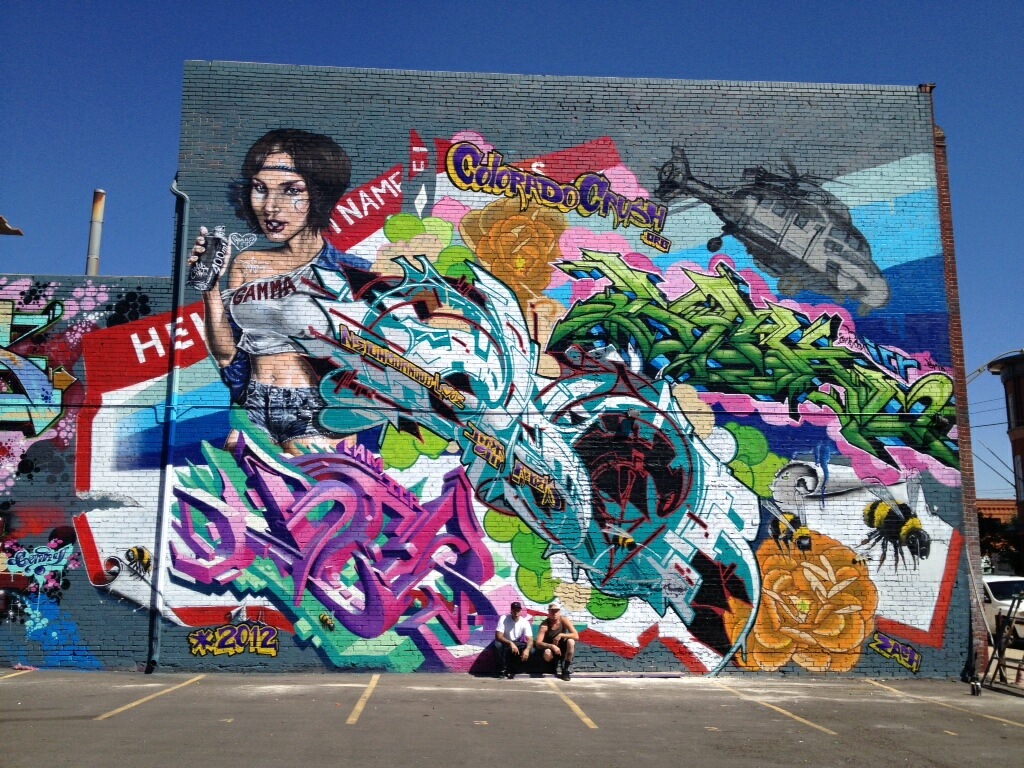
The Santa Fe Drive Corridor: 6th to Alameda
Start at the north end where 6th Avenue crosses Santa Fe Drive. The first major mural faces east on the side of a brick building near 7th and Santa Fe — a two-story piece depicting an eagle and serpent motif drawn from the Mexican flag, repainted and maintained by local artists over the decades. The colors run deep red, green, and gold against the brown brick. You can see it from the light rail platform at 10th and Osage, which drops you two blocks east of the corridor.
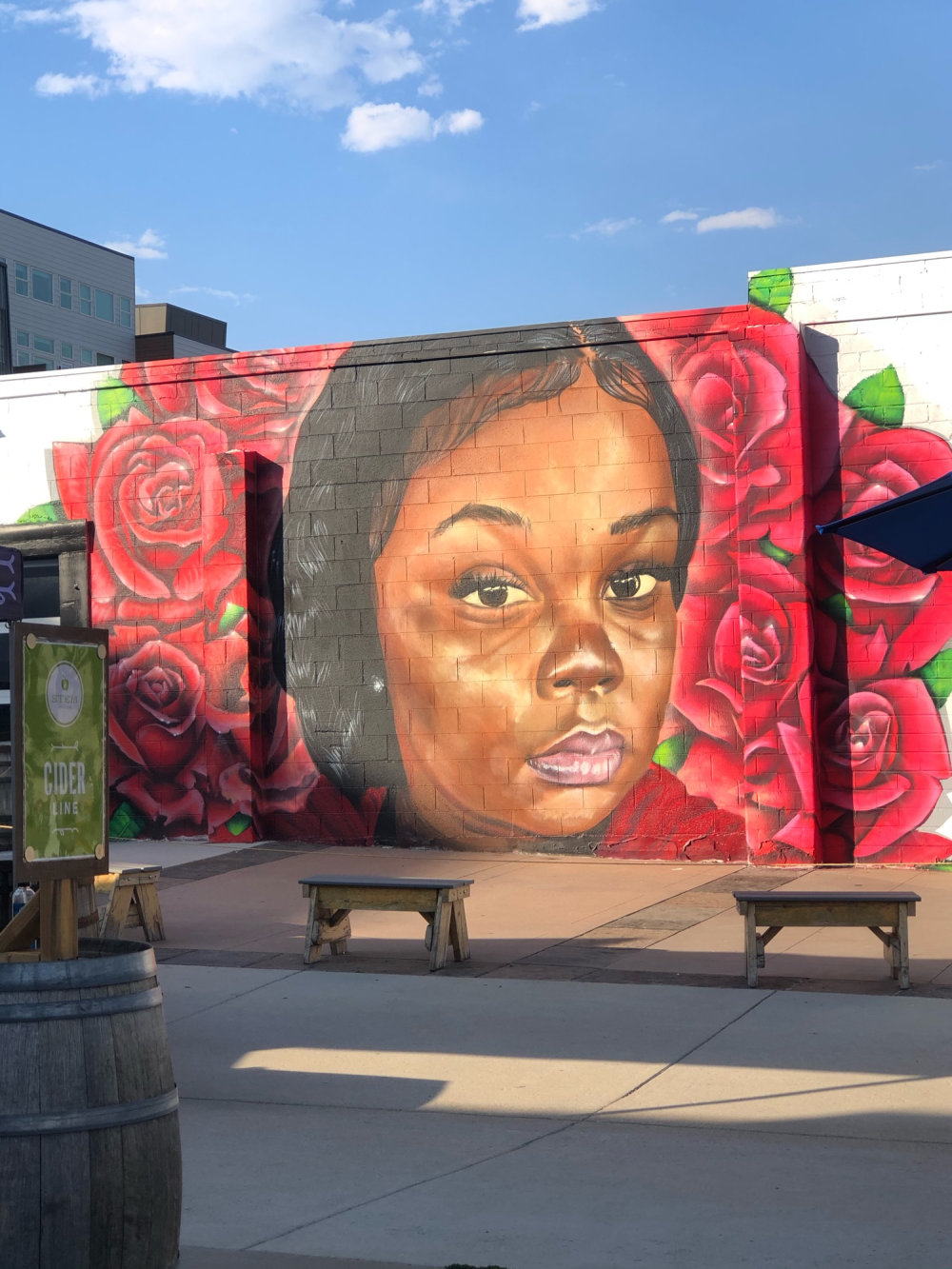
Walk south. Between 7th and 8th, the walls shift to smaller panels — commissioned portraits of neighborhood elders and activist figures. Some are labeled with names and dates. Others carry no text at all, just faces rendered at a scale that makes eye contact unavoidable. The paint weathers differently on stucco versus brick, and some of these pieces show their age in cracked surfaces and faded pigment. That wear is part of the record.
By 9th Avenue, you reach the densest gallery cluster. Spaces like Alto Gallery and Space Gallery sit within a few doors of each other. The exterior walls between them carry rotating murals — some repainted seasonally, others holding for years. Check the alleys here. Several artists use the narrow passages between buildings as vertical canvases, painting floor to ceiling in corridors barely wide enough for two people to pass.
Chicano Muralism: Decades Before the Street Art Boom
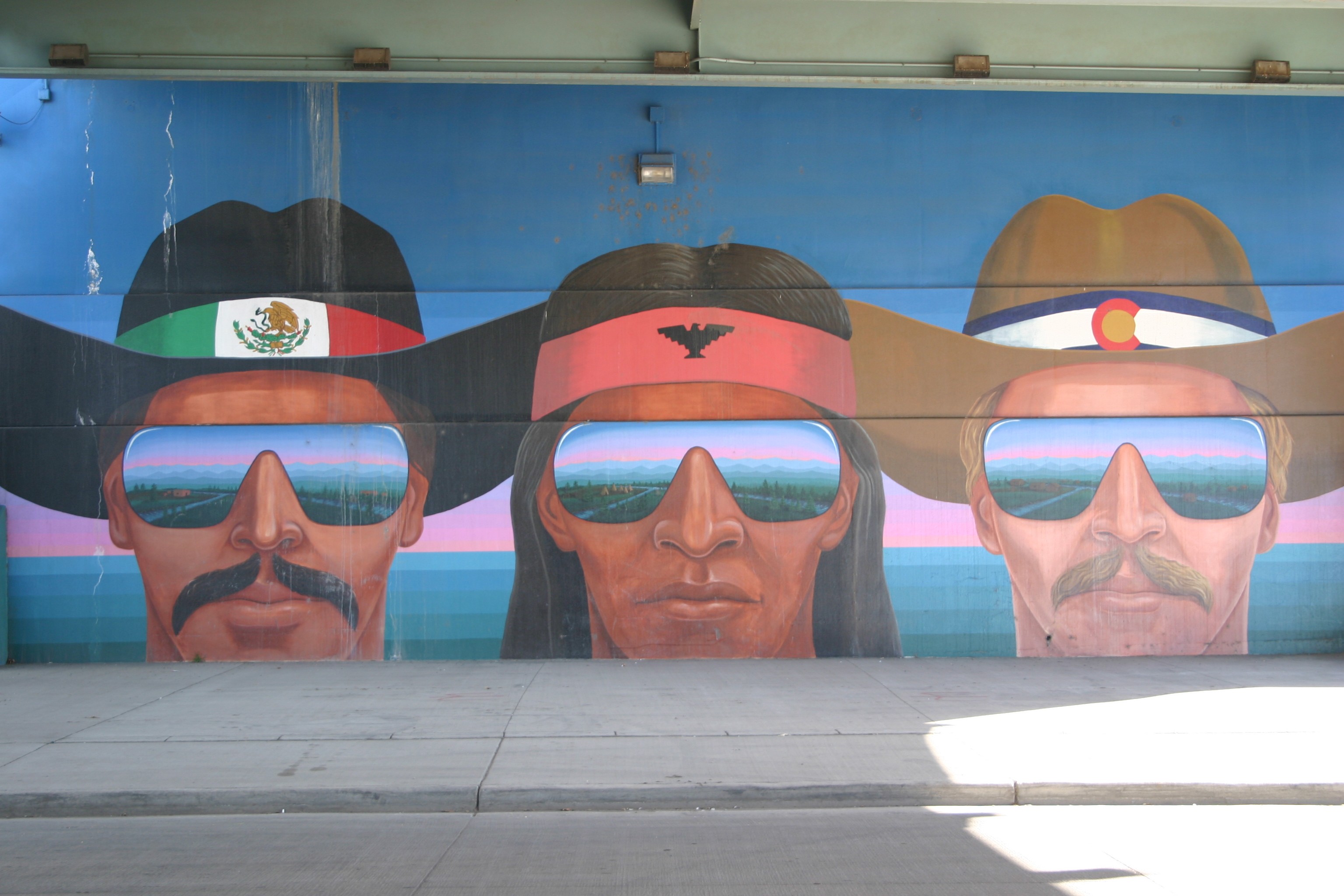
Denver’s Chicano mural tradition dates to the early 1970s, when artists connected to the Crusade for Justice — the civil rights organization founded by Rodolfo “Corky” Gonzales — began painting walls in the La Alma/Lincoln Park neighborhood. These murals carried political messages: farmworker solidarity, resistance to urban renewal displacement, and assertions of cultural presence in a city that was rapidly changing.
Emanuel Martinez, one of the movement’s founding artists, painted several walls along Santa Fe Drive that remain landmarks today. His work uses bold outlines and saturated earth tones — terra cotta, turquoise, ochre — and draws on both Mexican muralism (Rivera, Orozco, Siqueiros) and the specific light and landscape of the Front Range. Martinez’s influence runs through two generations of Denver muralists who trained informally on these same walls.
The tradition is living. Newer murals on Santa Fe Drive reference the older ones directly — quoting compositions, reusing color palettes, or painting adjacent to a historic piece as a form of conversation across decades. You can read the wall sequence like a timeline if you walk slowly enough.
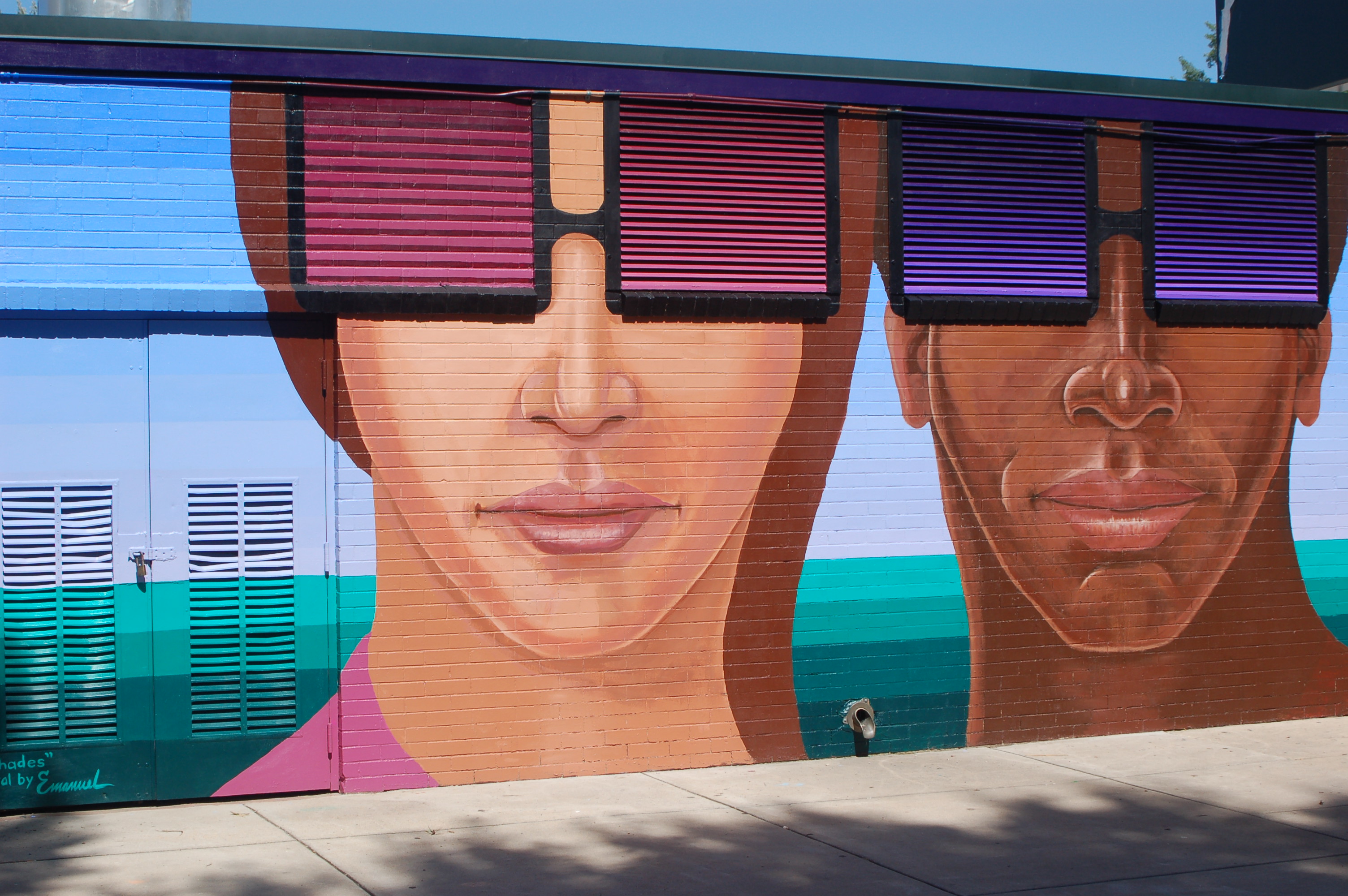
First Friday on Santa Fe
On the first Friday of every month, the Santa Fe Arts District opens its doors. Galleries extend their hours until 9 PM or later. Food trucks line the side streets. Foot traffic fills the sidewalks, and the murals become backdrops for a neighborhood-wide open house that draws thousands.
First Friday is the best time to see the murals with context. Gallery owners and artists stand outside their spaces. You can ask about a wall and often get the story — who painted it, when, and why. Several galleries hang work by the same artists whose murals face the street, so you can see the connection between the exterior public work and the interior studio practice.
The event runs year-round, including winter. January First Fridays are quieter but the light is different — low winter sun hits the west-facing walls at an angle that deepens the reds and golds. Summer editions are packed. Arrive before 6 PM for parking. The 10th and Osage light rail station is a ten-minute walk from the center of the strip. Use the event map to find current First Friday listings.
Galleries and Exterior Walls Worth Seeing
Museo de las Americas (861 Santa Fe Drive) — Denver’s only museum dedicated to Latino art and culture. The building’s exterior carries a large-format mural that rotates every few years. Inside, exhibitions connect contemporary Latino artists to the mural tradition outside. The museum sits at the corner of 9th and Santa Fe, central to the gallery walk.
Alto Gallery (955 Santa Fe Drive) — A contemporary gallery with a strong mural wall facing the parking lot on its south side. The current exterior piece uses geometric abstraction influenced by Indigenous textile patterns — angular forms in magenta, black, and white at roughly 15 by 30 feet.
RedLine Contemporary Art Center (2350 Arapahoe Street) — Not on Santa Fe Drive itself, but RedLine artists frequently paint Santa Fe walls. The cross-pollination between RedLine’s artist residencies and the Santa Fe corridor keeps new work appearing on the street.
Between the named galleries, watch for the unmarked studio doors. Many Santa Fe Drive buildings house working artists on upper floors, and their influence leaks onto the street-level walls in the form of test panels, sketch murals, and collaborative pieces that appear without announcement.
La Alma Park Murals
Two blocks east of Santa Fe Drive, La Alma Park anchors the residential side of the neighborhood. The park’s recreation center and surrounding walls carry some of the oldest surviving Chicano murals in Denver. These date to the mid-1970s and early 1980s, painted during a period when the neighborhood was actively resisting displacement.
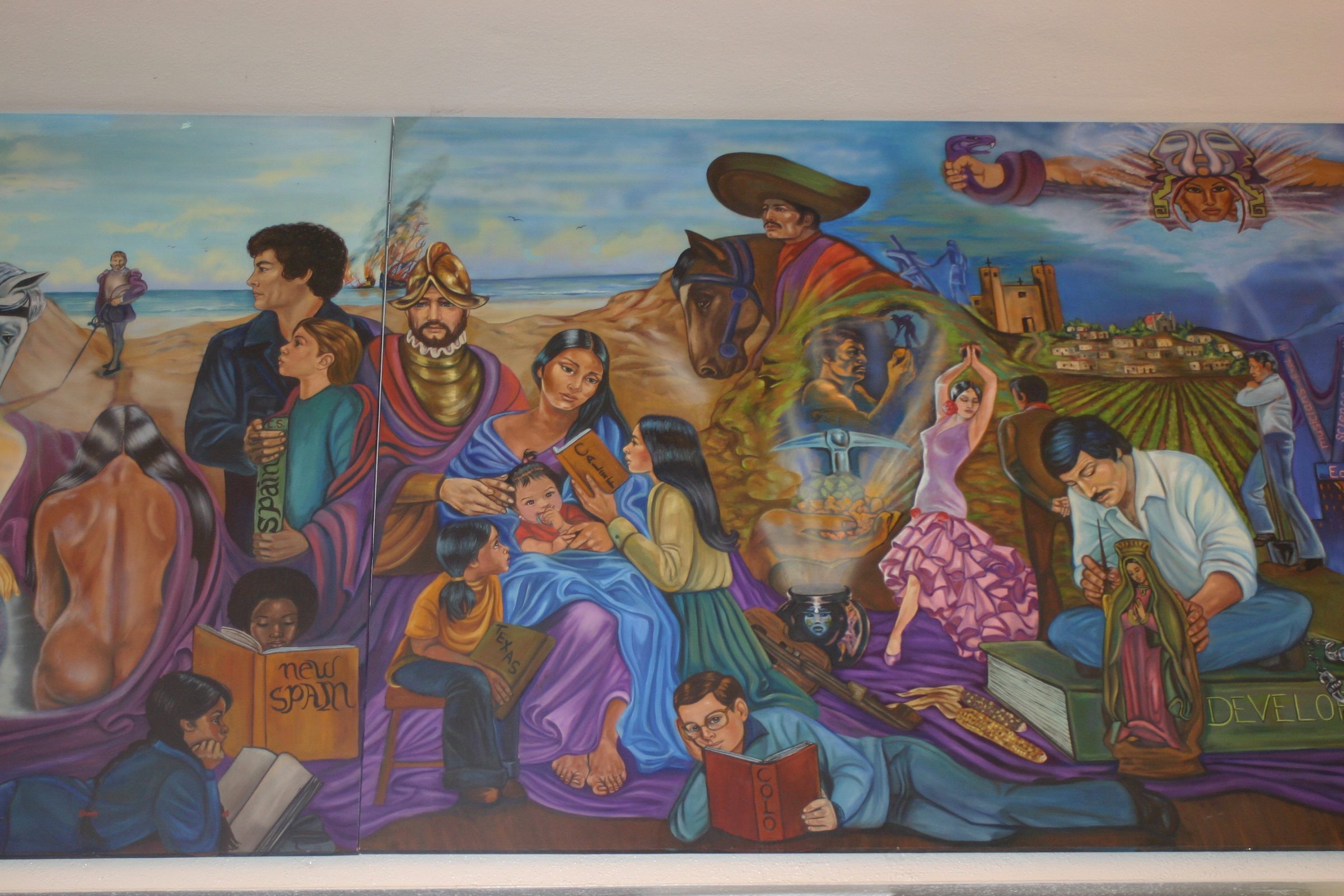
The rec center’s north-facing wall holds a panoramic scene — roughly 60 feet wide — depicting agricultural workers, families, and Denver’s skyline rendered in a style that echoes Diego Rivera’s Detroit Industry murals. The palette is warm: burnt sienna, maize yellow, and deep green against a sky that matches the actual Colorado blue visible above it.
La Alma Park is one of Denver’s 323 public parks (Denver Open Data, 2026), but it carries more painted history per square foot than almost any other green space in the city. The murals here are not behind glass or rope. Kids play in front of them. The paint chips and gets retouched. That’s the point — these walls live in the same weather and wear as the neighborhood itself.
Denver currently tracks 500 active construction permits citywide (Denver Open Data, 2026), and development pressure reaches into La Alma/Lincoln Park. Several longtime buildings near the park have been demolished or converted. The murals that survive on remaining walls become more significant with each one lost.
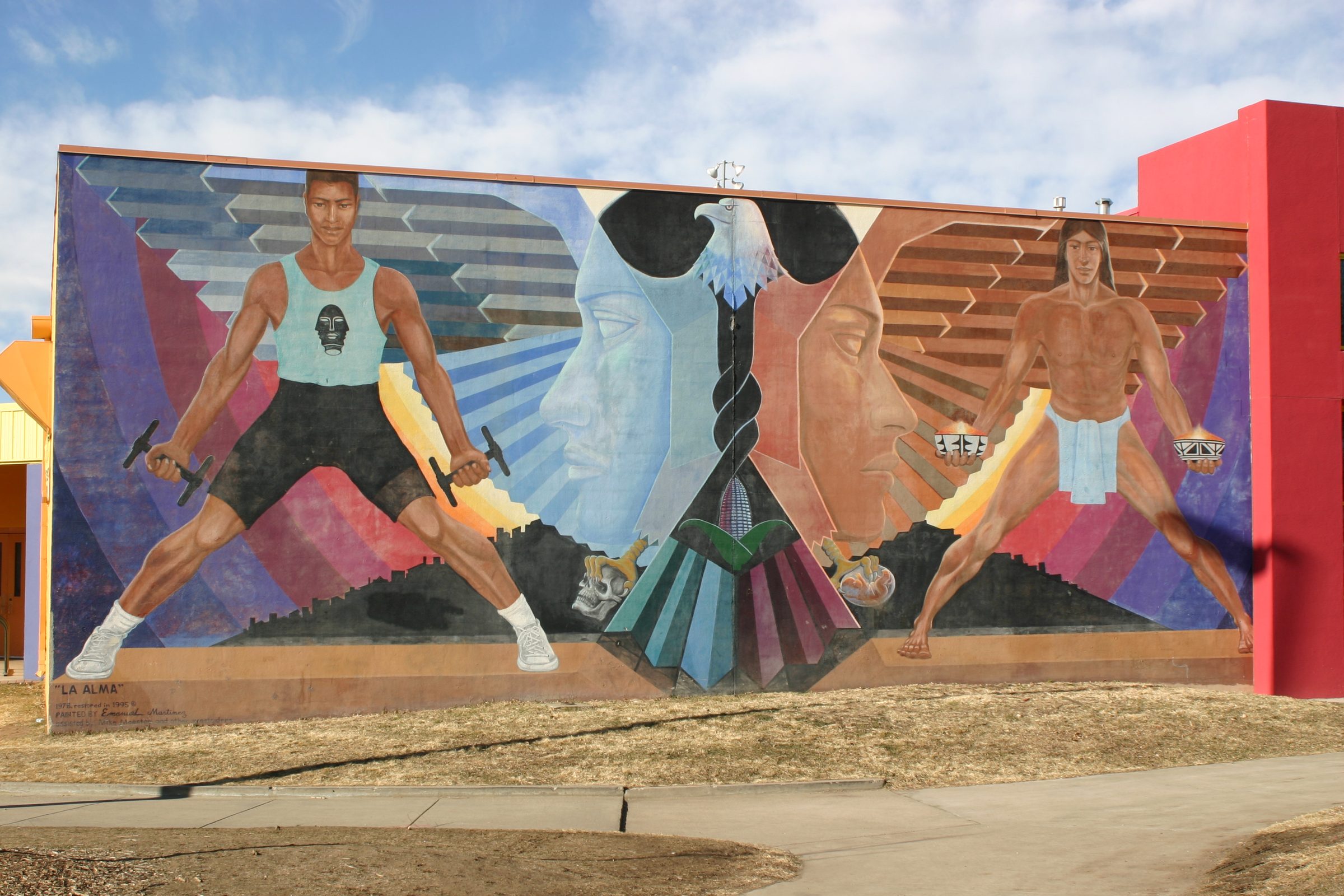
The full Santa Fe mural walk covers about 1.5 miles from 6th Avenue to Alameda. Budget 90 minutes to two hours if you stop at galleries. Start at the 10th & Osage light rail station and walk north to 6th, then double back south to Alameda. The west side of the street gets afternoon sun, which is best for photographing west-facing murals. Mornings favor the east-facing walls. Check the Denver mural map for locations and the neighborhood guide for nearby dining and parking.
Find Events on Santa Fe Drive
Browse Santa Fe EventsGet Denver Art and Culture Updates
Get the latest Denver events delivered to your inbox.
Hours, prices, and access change — confirm current details with the venue.
Keep reading
Arts & CultureRainy Day Boos: A Wednesday Paint and Sip Night in Lone Tree
Three facts from the listing make the case. The class is guided, so Brittlyn walks the room through the painting rather than leaving you with a blank
13 de octubre de 2026 · 3 min de lecturaSeasonal & HolidaysJack-o'-Lantern Moon: A Two-Hour Paint and Sip in Lone Tree
The class runs two hours, which fits inside a Saturday afternoon without taking the whole day.
13 de octubre de 2026 · 3 min de lecturaArtRiNo Mural Walk: Denver's Best Street Art Corridor
The RiNo Art District packs 500+ murals into a 10-block stretch. Here's how to walk it.
5 min de lectura